Key Takeaway
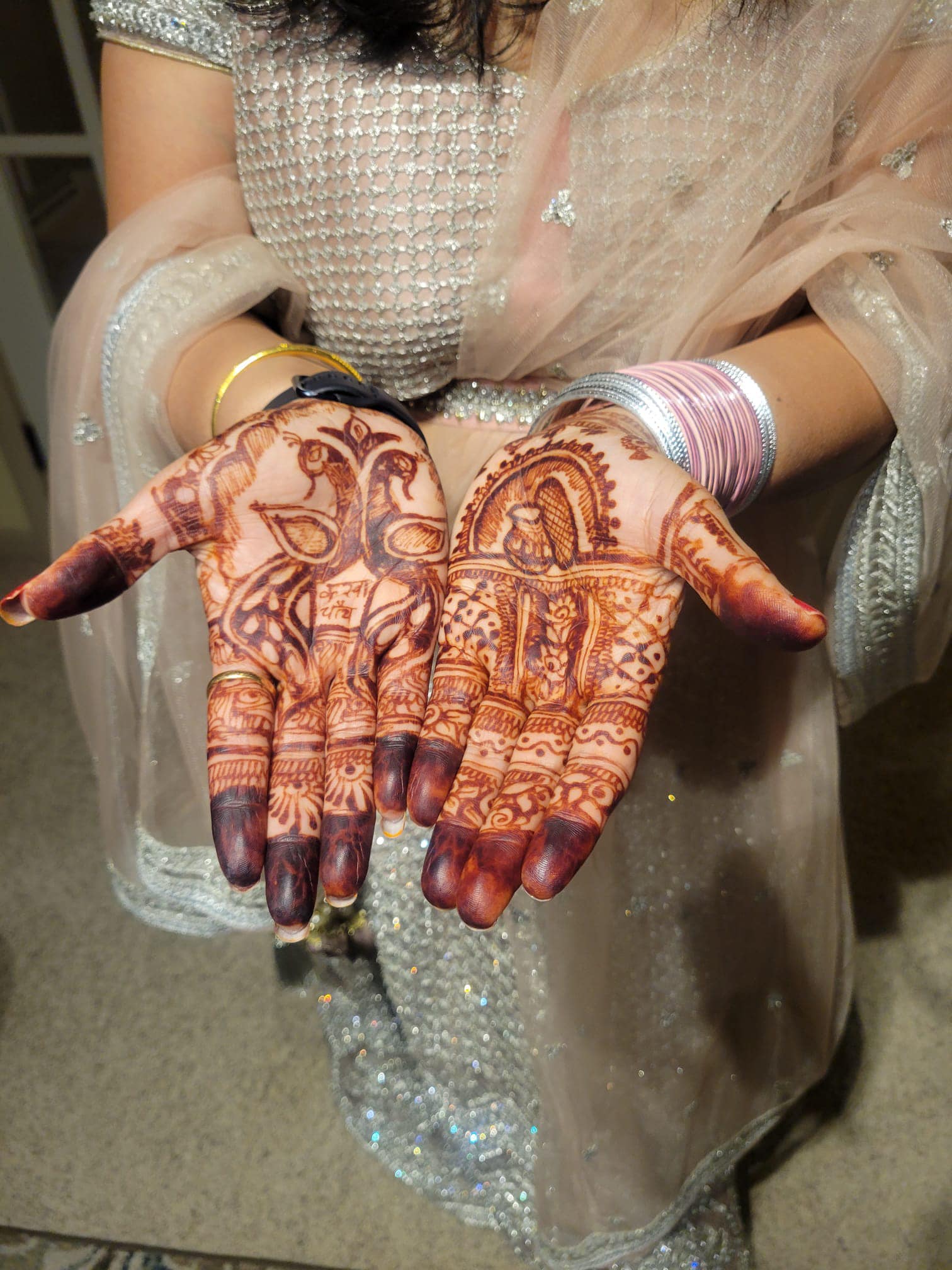
Gujarati mehndi is characterized by bold, open floral designs with mirror-like symmetry and significant negative space (2–4 hours). Rajasthani mehndi features dense, fine-line work covering fingertips to elbows with detailed narrative scenes (4–8 hours). Both traditions are rooted in distinct regional art histories and serve as expressions of cultural identity [1].
India's regional mehndi traditions are as diverse as its textile, dance, and culinary arts. Gujarati and Rajasthani mehndi represent two distinct schools of henna artistry, each reflecting the aesthetic values, cultural narratives, and artistic heritage of its region [1]. Understanding their differences provides insight into the broader tapestry of South Asian cultural expression.
What Defines Gujarati Mehndi as a Distinct Style?
Gujarati mehndi reflects the design sensibility found in Gujarat's broader artistic traditions — bold forms, strong outlines, and a preference for symmetry also seen in Gujarati textile arts like bandhani and patola weaving [2]. Key characteristics include:
- Bold, open compositions with deliberate negative space between motifs
- Large-scale floral motifs, peacocks, and geometric shapes with strong outlines
- Mirror-like bilateral symmetry — designs on one hand mirror the other
- Figurative elements: dulha-dulhan (bride and groom), mandap (wedding canopy), family scenes
- Application time: typically 2–4 hours for a full bridal design
- Emphasis on clarity and elegance over density
What Characterizes Rajasthani Mehndi?
Rajasthani mehndi is considered the most intricate of India's regional henna traditions. It reflects the Rajasthani artistic heritage of detailed miniature painting and textile embroidery (particularly Rajasthani block printing and zardozi work) [3]. Its defining features include:
- Dense, full-coverage designs extending from fingertips to elbows (and often feet)
- Extremely fine line work with minimal negative space
- Elaborate narrative scenes: wedding processions (baraat), ritual depictions, animals, and architecture
- Detailed figurative elements: elephants, camels, palace motifs specific to Rajasthani culture
- Application time: 4–8 hours for full bridal coverage
- Often cited as the most complex mehndi tradition in India [1]
How Do These Two Traditions Compare Side by Side?
Understanding the key differences helps brides make informed decisions based on their cultural background, aesthetic preferences, and practical considerations:
- Coverage: Gujarati uses open space strategically; Rajasthani maximizes skin coverage
- Line weight: Gujarati favors bolder lines; Rajasthani uses finer, more delicate strokes
- Time commitment: 2–4 hours (Gujarati) vs 4–8 hours (Rajasthani)
- Narrative content: Gujarati includes symbolic motifs; Rajasthani often tells a full wedding story
- Regional influence: Gujarati reflects bandhani/patola aesthetics; Rajasthani reflects miniature painting [2][3]
- Cultural heritage: Many brides choose the style of their family's regional origin
Can Gujarati and Rajasthani Elements Be Combined?
In contemporary practice, many brides request fusion designs that incorporate elements from both traditions — for example, bold Gujarati florals on the back of the hand with fine Rajasthani detailing on the palm and fingers. This blending reflects broader trends in modern South Asian weddings, where cultural elements are mixed to reflect multicultural families and personal identity [1].
Both traditions share the cultural belief that a deep, dark henna stain symbolizes a strong marital bond. Regardless of regional style, the mehndi ceremony (mehndi ki raat) remains one of the most joyful pre-wedding celebrations in Indian culture.
Frequently Asked Questions
- What is the difference between Gujarati and Rajasthani mehndi?
- Gujarati mehndi uses bold, open floral designs with mirror symmetry and negative space (2–4 hours). Rajasthani mehndi features dense, fine-line full coverage with narrative wedding scenes (4–8 hours). Each reflects the broader artistic traditions of its region.
- How long does each style take to apply?
- Gujarati bridal mehndi typically takes 2–4 hours. Rajasthani bridal mehndi takes 4–8 hours due to the density and fine detail of the work.
- Can you combine Gujarati and Rajasthani styles?
- Yes, fusion designs are increasingly common. A mehndi artist can blend bold Gujarati motifs with fine Rajasthani detail work. This approach is popular among brides from multicultural families or those who appreciate elements of both traditions.
- Which mehndi style is more traditional?
- Both styles have deep historical roots. Rajasthani mehndi is often considered the most traditional in terms of complexity and coverage, while Gujarati mehndi has its own distinct centuries-old design vocabulary. Neither is more 'authentic' than the other — they are parallel traditions [1][3].
References
- Cartwright-Jones, C. (2006). Henna's Secret History: The History, Mystery, and Folklore of Henna. TapDancing Lizard Publications.
- Gillow, J., & Barnard, N. (2014). Indian Textiles. Thames & Hudson. (Textile design parallels in Gujarati arts.)
- Crill, R. (2015). The Fabric of India. V&A Publishing. (Rajasthani textile and decorative art traditions.)