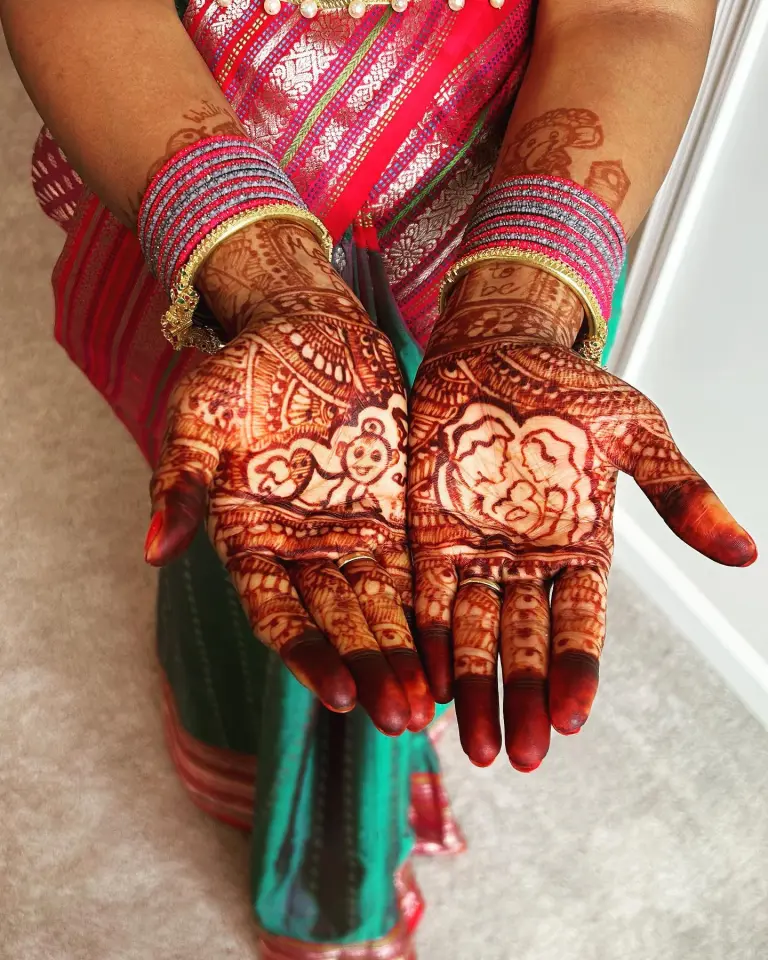
Key Takeaway
Bridal henna lasts 1–3 weeks depending on placement, aftercare, and skin type. The lawsone molecule in henna binds to keratin in the skin's outermost layers [1]. Palms and soles stain darkest because those areas have the thickest stratum corneum. To maximize longevity: leave paste on 6–8 hours, avoid water for 12–24 hours, and apply a lemon-sugar sealant during drying.
Henna staining is a biochemical process. The active molecule, lawsone (2-hydroxy-1,4-naphthoquinone), migrates from the paste into the skin and binds to keratin proteins in the stratum corneum — the outermost layer of the epidermis [1]. The stain fades naturally as the skin exfoliates over the following weeks.
Where Does Henna Last the Longest on the Body?
Stain darkness and longevity correlate directly with the thickness of the stratum corneum. Dermatological research shows that the palms and soles have the thickest keratin layer — up to 1.5 mm compared to 0.1 mm on the forearms [2]. This is why henna on these areas stains darkest and persists longest.
- Palms and soles: 2–3 weeks (thickest keratin layer, darkest stain)
- Fingers and fingertips: 2–3 weeks
- Back of hand: 1–2 weeks
- Forearms: 1–2 weeks
- Upper arms and feet tops: 1 week or less (thinnest skin)
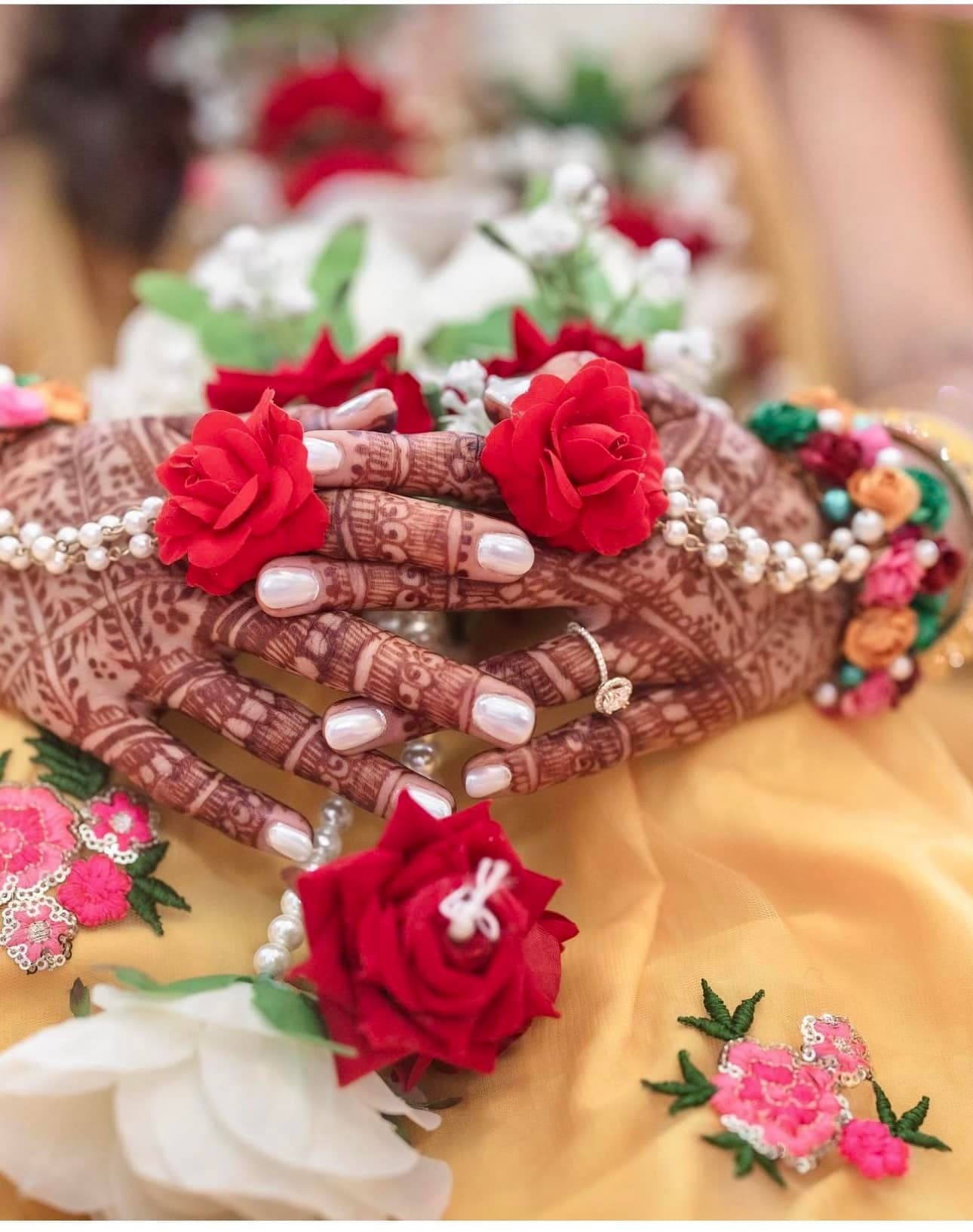
What Are the Evidence-Based Rules of Henna Aftercare?
Aftercare practices are rooted in the chemistry of lawsone binding. The dye molecule requires time, warmth, and an acidic environment to fully migrate into the skin [3]. Disrupting this process with water or friction reduces stain depth.
- Leave henna paste on for 6–8 hours minimum — overnight yields the deepest stain
- Apply a lemon juice and sugar sealant while the paste is wet to maintain moisture and acidity
- Avoid water on the stained area for 12–24 hours after paste removal — water interrupts oxidation
- Apply a natural oil (coconut or olive) to create a barrier against water and friction
- Avoid chlorine, harsh soaps (especially SLS-based), and chemical exfoliants on hennaed skin
- Pat dry gently instead of rubbing after hand washing
- Warmth accelerates the lawsone-keratin reaction — hold hands near a warm surface or use a hairdryer on low [4]
Note: The darkening process is an oxidation reaction. Lawsone initially appears orange and oxidizes to a deeper brown over 24–48 hours, similar to how a cut apple browns when exposed to air [3].
What Does the Henna Stain Timeline Look Like?
The color evolution of a henna stain follows a predictable pattern governed by oxidation chemistry:
- Day 1: Bright orange immediately after paste removal (lawsone has not yet fully oxidized)
- Day 2–3: Stain deepens to a rich reddish-brown as oxidation completes
- Week 1: Peak color — deep, warm mahogany brown
- Week 2–3: Gradual fading as the stratum corneum naturally sheds through desquamation [2]
The rate of fading is determined by individual cell turnover rate, which varies by age, hydration, and overall skin health. Palms and fingertips retain color longest because these areas regenerate more slowly due to thicker skin.
Frequently Asked Questions
- How long should I leave bridal henna paste on?
- Research on lawsone absorption indicates that 6–8 hours provides optimal dye migration into the keratin layer. Overnight application (8–12 hours) yields the deepest stain. Let the paste flake off naturally rather than scraping.
- Can I shower after getting henna?
- Avoid water contact on the hennaed area for 12–24 hours after paste removal. Water interrupts the oxidation process that darkens the stain. When you do wash, keep exposure brief and pat dry gently.
- Why is my henna stain orange and not dark?
- An orange stain immediately after paste removal is normal. Lawsone undergoes oxidation over 24–48 hours, gradually darkening to a reddish-brown. The final color depends on skin thickness, body temperature, and aftercare.
- Does skin type affect how long henna lasts?
- Yes. Individuals with drier skin tend to retain henna longer because the stratum corneum exfoliates more slowly. Oily skin or skin that is frequently washed and exfoliated will shed the stain faster.
References
- Semwal, R.B., Semwal, D.K., Combrinck, S., Cartwright-Jones, C., & Viljoen, A. (2014). Lawsonia inermis L. (henna): Ethnobotanical, phytochemical and pharmacological aspects. Journal of Ethnopharmacology, 155(1), 80–103.
- Murphrey, M.B., Miao, J.H., & Zito, P.M. (2023). Histology, Stratum Corneum. StatPearls Publishing.
- Cartwright-Jones, C. (2006). Henna's Secret History: The History, Mystery, and Folklore of Henna. TapDancing Lizard Publications.
- Bosoglu, A., et al. (2021). Effect of temperature on lawsone dye release from henna paste. Journal of Cosmetic Dermatology, 20(9), 2847–2852.