Key Takeaway
Five evidence-based bridal makeup practices: (1) begin a consistent skincare routine 4–6 weeks prior, (2) match foundation in natural light to the neck and chest, (3) use layered waterproof eye products, (4) apply setting spray formulated with film-forming polymers, and (5) blot with papers instead of adding powder for touch-ups [1].
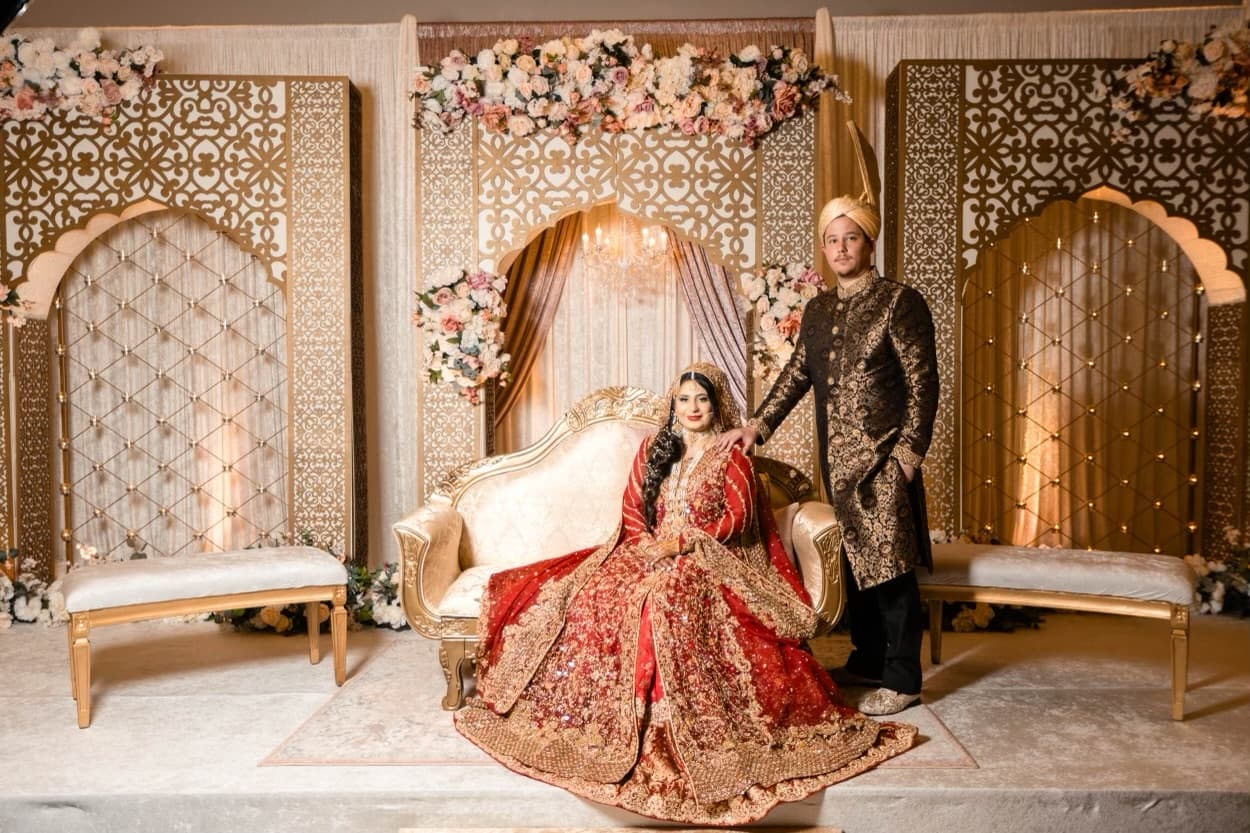
Bridal makeup for South Asian weddings must withstand long ceremonies, emotional moments, venue changes, and extensive photography. For Pittsburgh brides moving between hotel prep, ceremony coverage, and reception lighting, the following practices help the makeup stay polished while still looking natural in person and on camera.
How Does Pre-Wedding Skincare Affect Makeup Longevity?
Dermatologists recommend establishing a consistent skincare routine at least 4–6 weeks before any major event [1]. Well-hydrated skin creates a smoother surface for makeup application and improves product adhesion. The stratum corneum — the skin's outermost barrier — functions best when properly moisturized.
- Start a cleanse-moisturize-SPF routine 4–6 weeks before the wedding
- Schedule professional facials 2+ weeks before — never within the final week, as treatments like chemical peels need recovery time [1]
- Hydrated skin holds foundation longer because the moisture barrier is intact
- Avoid introducing new products in the final 2 weeks to prevent contact dermatitis or irritant reactions
Why Does Foundation Matching Matter for Melanin-Rich Skin?
Foundation shade accuracy is particularly important for medium to deep skin tones, which often have complex undertones (warm, cool, olive, or neutral). Research in cosmetic chemistry shows that melanin-rich skin reflects light differently than lighter skin, making artificial lighting unreliable for shade matching [2]. Always test foundation in natural daylight against the neck and chest — never the back of the hand — to ensure a seamless match.
Long-wear, transfer-resistant formulas are formulated with film-forming polymers and volatile silicones that create a flexible, breathable layer. These are preferable for events lasting 6+ hours [3].
How Should Eye Makeup Be Layered for Durability?
The layering technique for long-wearing eye makeup follows a principle of alternating textures — cream, powder, cream — to create adhesion between layers [3]:
- Apply an eyeshadow primer to the lid (creates a tacky base that prevents creasing)
- Set cream products with a light dusting of translucent powder before adding color
- Use waterproof mascara and eyeliner formulations, which contain wax-based polymers resistant to moisture
- Build pigment gradually in thin layers rather than one heavy application
- For bold South Asian bridal eye looks (smoky eyes, cut-creases), layering is essential for color depth and staying power
What Makes Setting Sprays Effective for Long Events?
Setting sprays work by depositing a thin film of polymers (often acrylic copolymers or PVP) over the makeup, essentially locking layers together and reducing transfer [3]. For ceremonies lasting several hours in warm venues, a combination approach works best: powder setting on the T-zone to absorb oil, and spray setting on the rest of the face to maintain a natural, luminous finish.
What Is the Best Approach for Mid-Event Touch-Ups?
Adding more powder over existing makeup creates a cakey, textured appearance. Oil-blotting papers absorb excess sebum without disturbing the underlying makeup layers [1]. A small touch-up kit should include:
- Oil-blotting papers (absorb shine without adding product)
- A mini setting spray (to refresh the setting film)
- Lip color (lips are the most frequently touched-up area)
- A small mirror
Frequently Asked Questions
- How long does South Asian bridal makeup take?
- A full bridal look — base, eyes, contouring, lips, and finishing — typically takes 1.5–2.5 hours depending on the complexity of the look. A prior trial appointment is standard practice to confirm preferences and timing.
- Should I do a bridal makeup trial?
- Yes. A trial allows the makeup artist to test foundation shades under natural and flash lighting, confirm product compatibility with your skin type, and agree on the final look. Most professionals recommend booking the trial 4–8 weeks before the wedding.
- What is the difference between soft glam and full glam?
- Soft glam uses neutral palettes, lighter contouring, and a skin-like finish. Full glam involves bolder eye techniques (smoky or cut-crease), heavier sculpting, dramatic lashes, and more pigmented lip color. Both are appropriate for South Asian weddings — the choice depends on personal preference and the event's formality.
- How do I prevent bridal makeup from melting at an outdoor wedding?
- Use a silicone-based primer, waterproof eye products, powder setting on the T-zone, and a strong setting spray with film-forming polymers. Airbrush foundation, which uses finely atomized pigments, also provides improved longevity in heat [3].
References
- Baumann, L. (2022). Cosmetic Dermatology: Principles and Practice (3rd ed.). McGraw-Hill Education.
- Draelos, Z.D. (2015). Cosmetics and Dermatologic Problems and Solutions (3rd ed.). CRC Press. (Shade matching challenges for melanin-rich skin tones.)
- Draelos, Z.D. (2019). The Science Behind Skin Care Products. In Treatment of Skin Disease (pp. 45–58). Elsevier. (Film-forming polymers and cosmetic formulation chemistry.)